
The Importance of Melt Quality: What Happens Before the Plastic Enters the Mold?
Inconsistent melt quality can lead to dimensional variations, cosmetic defects, reduced mechanical properties, and unnecessary scrap. Achieving a consistent melt requires attention to several interconnected factors.
What Defines Good Melt Quality?
A high-quality melt is more than material heated to the correct temperature. It requires:
- Thermal uniformity: Consistent melt temperature throughout the material.
- Homogeneity: Uniform distribution of additives, colorants, and fillers.
- Complete melting: Proper plasticization without unmelted particles.
- Material integrity: Minimal degradation from excessive heat, shear, moisture, or residence time.
Material Drying: Where Melt Quality Begins
Proper material preparation is essential, particularly for hygroscopic resins such as nylon, PET, and polycarbonate, which absorb moisture.
Excessive moisture can cause hydrolytic degradation during melting, potentially reducing mechanical properties and creating cosmetic defects such as splay.
Effective drying requires control of temperature, airflow, drying time, and dew point to achieve the manufacturer’s recommended moisture level. Drying technologies from Conair help processors maintain consistent material preparation and establish the foundation for repeatable melt quality.
Non-hygroscopic materials such as polypropylene and polyethylene generally do not require drying to remove absorbed moisture, although surface moisture may still need attention.
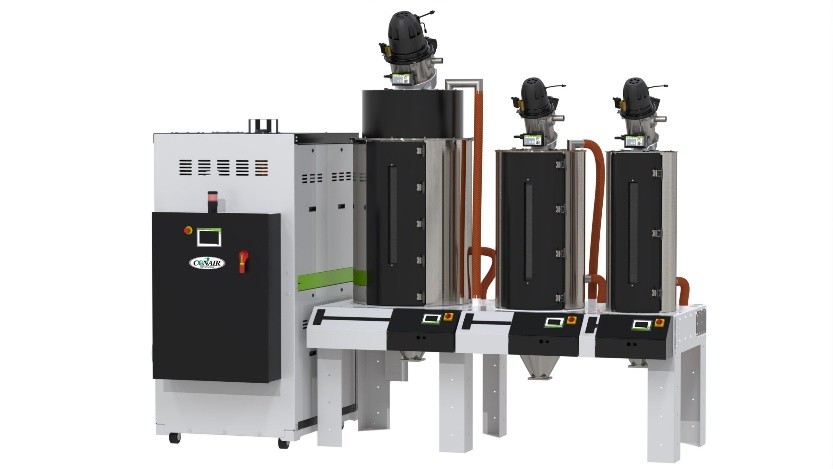
Conair’s modular centralized resin-handling system: ResinWorks™
Screw Design and Melt Homogeneity
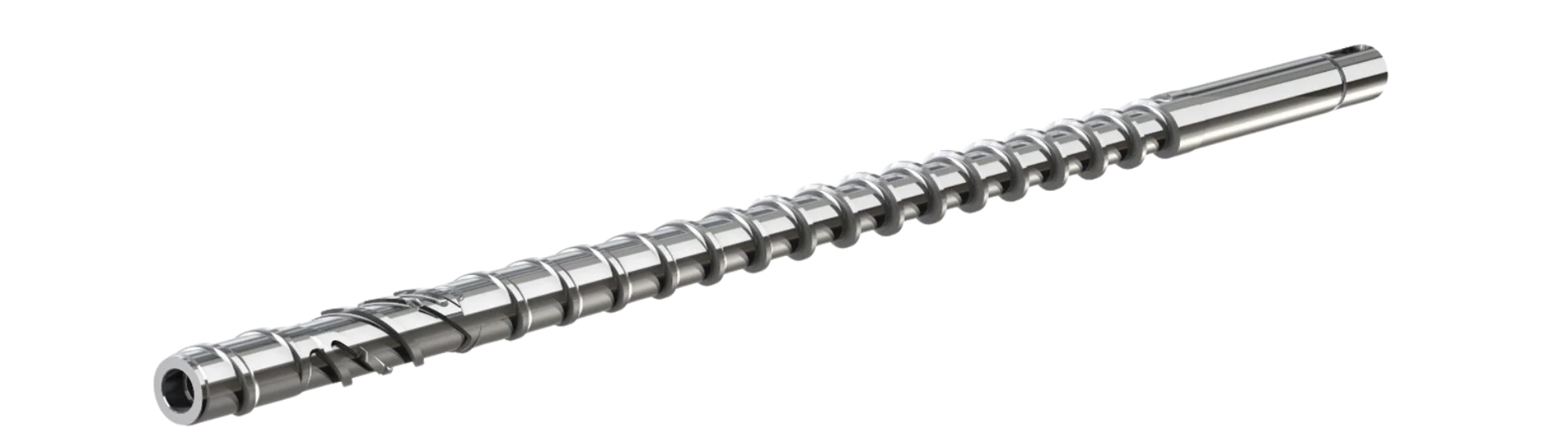
The plasticizing screw plays a critical role in conveying, melting, and mixing the material before injection.
Screw geometry, compression ratio, and mixing elements influence melting efficiency and melt uniformity. While general-purpose screws accommodate many applications, engineering resins, glass-filled compounds, color concentrates, and recycled materials may benefit from specialized designs.
Reiloy offers screw technologies designed to improve melt homogeneity and processing consistency.
Melt Temperature and Shear Heating
Barrel temperature settings do not necessarily represent the actual melt temperature. Mechanical energy generated during screw rotation also contributes to melting.
Excessive screw speed, back pressure, or unsuitable screw geometry can generate unnecessary shear heating, potentially degrading sensitive materials.
Maintaining appropriate plasticizing conditions is essential for consistent melt temperature and material integrity.
Residence Time and Shot Utilization
The time material spends in the heated barrel can significantly affect melt quality.
Excessive residence time may cause thermal degradation, discoloration, or deterioration of mechanical properties. Conversely, inadequate melting or plasticizing time can produce an inconsistent melt.
Shot size, barrel capacity, screw recovery, and cycle time must therefore be considered together. Selecting an injection unit based solely on maximum shot capacity may compromise processing efficiency and material quality.
Process Repeatability and Equipment Condition
Consistent melt preparation also depends on stable machine operation.
Variations in screw recovery, rotational speed, back pressure, and temperature control can affect melt consistency from cycle to cycle.
Modern injection molding machines, including those manufactured by ARBURG, provide precise plasticizing control and monitoring to support repeatable processing conditions.
However, even sophisticated controls cannot compensate entirely for worn screws and barrels. Excessive wear can affect recovery consistency, melting efficiency, and melt quality, making periodic inspection and measurement important.
Why Melt Quality Matters
As molders face increasing demands for tighter tolerances, improved part quality, and greater use of recycled materials, melt consistency becomes increasingly important.
Material drying, screw design, melt temperature, residence time, and machine control should be evaluated as an integrated process rather than individual variables.
Conclusion: Good Parts Begin With a Good Melt
Before adjusting mold temperatures, injection speeds, or holding pressures to correct recurring defects, processors should consider the quality and consistency of the melt entering the mold.
A stable process begins with a stable melt.
How Turner Group Can Help
Through technologies from Conair, Reiloy, and ARBURG, Turner Group helps plastics processors evaluate material preparation, plasticizing performance, and machine consistency.
Contact Turner Group to explore opportunities to improve melt quality, reduce scrap, and achieve more consistent production